In October 2018, I attended a week-long course to learn how to teach meditation and mindfulness. The course was organised by Zenways and led by one of its members, Seán Collins.
By the end of that week, I knew that something had changed.
The course took place in Forest Row, and during those days I felt I had gained a great deal of confidence in myself and in what I might be able to do going forward.
Of course, I had little idea then where any of this would lead. I was beginning to understand a little more about myself and about the way my mind worked.
I could see how constantly the mind assigns value to things: this is good, that is bad; I want this, I don’t want that. Over time we build an enormous storehouse of these judgements and, often without noticing it, respond to the present through everything we have accumulated in the past.
So what changed during that week?
It is difficult to put into words, but the expression I found for it at the time was the neutral place.
There seemed to be moments when I could encounter something before immediately deciding what it was, whether I liked it or disliked it, whether it was good or bad.
It felt clearer and more direct.
And suddenly possibilities seemed to appear where previously I hadn’t seen them.
In the weeks following the course, something else happened. Emotions started pouring out of me.
I cried.
A lot.
They weren’t tears of sadness or even happiness. There was just crying, and strangely, it felt beautiful and liberating.
What fascinated me was that I could sometimes observe it with a certain detachment. The crying was happening, but I didn’t necessarily have to construct a story around it. I didn’t always have to explain it.
It could simply happen.
This was perhaps my first strong experience of something I had previously understood mainly as an idea: that I didn’t necessarily have to become completely entangled in everything happening inside me.
Meditation was already bringing benefits to my life. I felt calmer, kinder and more patient. But this seemed somehow different. I was beginning to experience another way of relating to myself and, consequently, to the people and things around me.
So, back to Zenways.
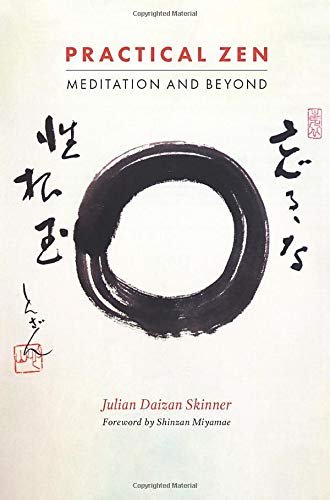
I had originally discovered Zenways because some time earlier I had read a book by Daizan Roshi called Practical Zen: Meditation and Beyond. I enjoyed the book enormously and was particularly interested to discover that Daizan ran a community, or Sangha, where people practised Zen Buddhism.
I wanted to join.
At that point I had never seriously explored Buddhism and knew very little—almost nothing—about Zen.
After the course in Forest Row, joining Zenways felt like a natural next step. Whatever had opened during that week had made me curious about the practice behind it.
Perhaps there was gratitude in there too.
And certainly excitement.
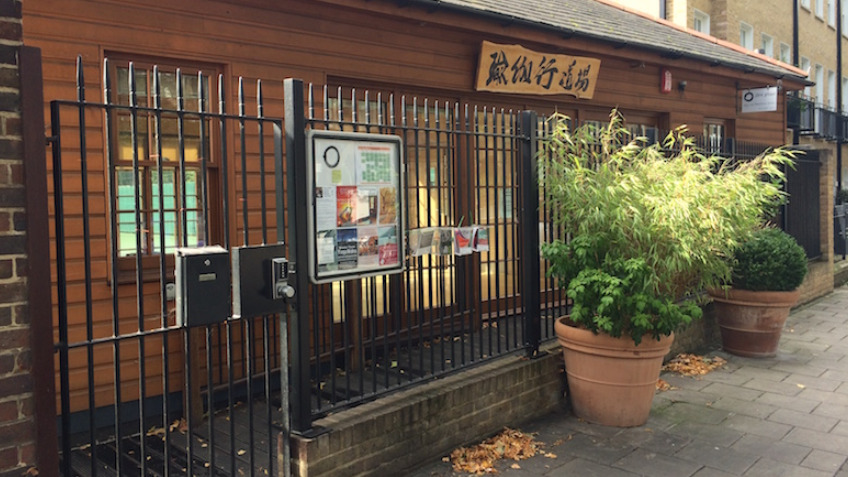
I wanted to meet Daizan as soon as possible, so I travelled to the dojo in Camberwell, London.
There I had my first private meeting with him, known in the Zen tradition as Sanzen. These meetings give a student the opportunity to meet the teacher directly and talk about their practice.
I remember that when I finally sat in front of Daizan, there wasn’t very much I wanted to say.
Mostly, I just wanted to say:
Thank you.
I felt enormous gratitude for whatever shift or opening had begun a few months earlier.
From there I became increasingly involved with Zenways and its activities. I became a Zen student and began practising under Daizan’s supervision.
For me, initially, this meant sitting in meditation once or twice every day. I also began exploring the vast literature of Zen, trying to understand what Zen teachers, past and present, had been pointing towards.
Little by little, something began to change in the way I approached practice.
Zen wasn’t confined to sitting on a cushion.
Walking could be Zen practice.
Working could be Zen practice.
Eating, speaking, listening—all of these could become practice.
One of the simplest and most important teachings for me was this:
When doing something, do it totally.
Rather than doing something while simultaneously being dragged around by thoughts, preferences, resistance and judgement, I could simply give myself to the activity in front of me.
Sometimes, briefly, the distinction between me doing something and simply doing seemed less important.
I had heard Zen teachings speak about breaking down the wall of separation—the sense of ourselves as isolated individuals standing apart from the rest of existence.
Ideas such as no-self, emptiness and non-separation can sound extremely abstract when encountered in books. I certainly don’t claim to have reached some final understanding of them.
But through practice, they were beginning to feel less like philosophical ideas.
There were moments when the usual sense of me here and everything else out there seemed less solid.
Zen teachings sometimes express this much more strongly: that the separation itself is a creation of the habitual mind; that the separate self we defend so fiercely cannot actually be found in the way we imagine it; even that we are not separate from the universe but expressions of the universe itself.
I was beginning to get a taste of what those words might be pointing towards.
And then, inevitably, the habitual mind would return.
Likes and dislikes.
Judgements.
Resistance.
The endless commentary.
So the practice continued.
Again and again, there was the possibility of returning to what was actually happening and responding to what the situation required rather than only to the story I was creating around it.
This, in a nutshell, is the training I have been doing with Zenways.
There is much more to it, of course, but this has been at the heart of the practice for me.
And over time I began to appreciate the name Zenways itself.
There isn’t only one way.
We can practise while sitting.
Walking.
Working.
Running.
Speaking.
Looking into a mirror.
Working with a koan.
Perhaps all these different ways are ultimately asking the same thing of us:
to meet what is here, completely.
And, of course, having spent all this time trying to explain Zen—
Zen would probably object to being defined at all.