Sesshin (5 Day Retreat) — Mirror Zen
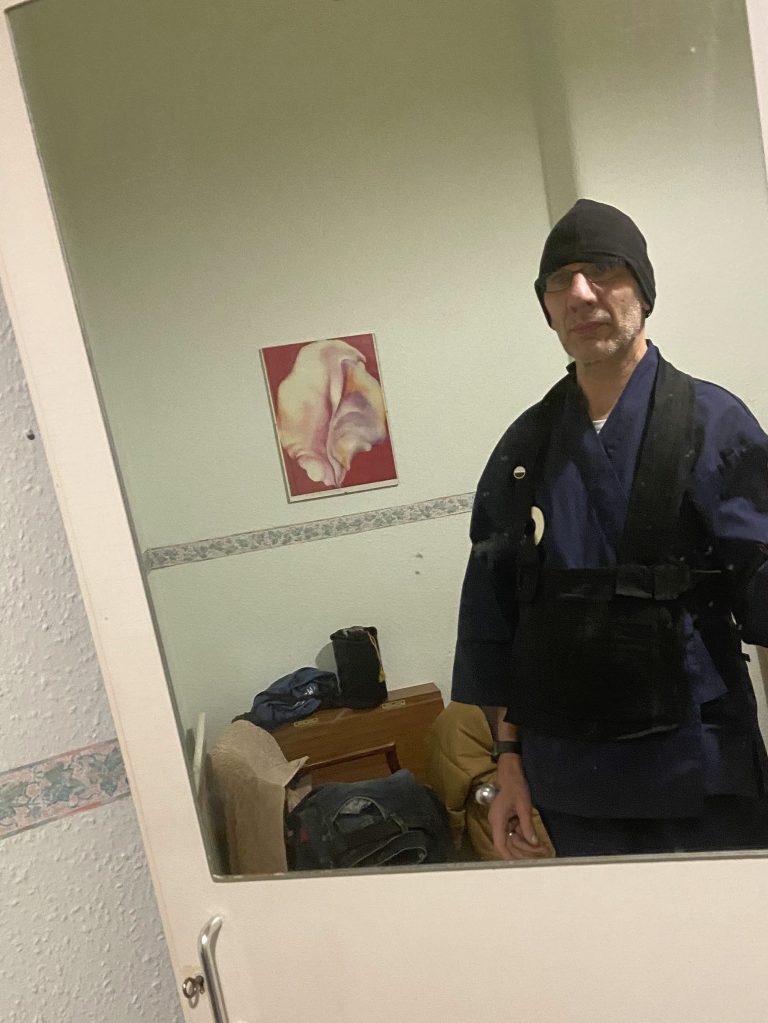
I know every wrinkle on my face, every scar, indentation, rise and valley—because I stared into a mirror for five consecutive days.
Last month, I attended a sesshin, a meditation retreat in the Zen tradition. During this period of intense practice, one follows a strict schedule: sitting meditation, walking meditation, working meditation, mindful eating, mindful movement, chanting—and silence.
A lot of silence.
And it was within that silence that I began to notice more clearly what was actually going on as I moved through the various activities of the day.
There was no conversation to use as a distraction. No idle chatter to lean on.
The desire to move during meditation. To scratch. To rush to the food line. To ignore someone else. To feel irritated because something I wanted had run out.
Small things.
But in silence, small things can become remarkably loud.
There was also something beautiful about spending so much time without speaking. As someone who sometimes feels awkward or inadequate in social situations, I discovered that I rather liked not having to say anything.
I could simply follow the rhythm of the sesshin: sitting, walking, working, eating, moving.
And looking.
Again and again, looking at the same face in the mirror.
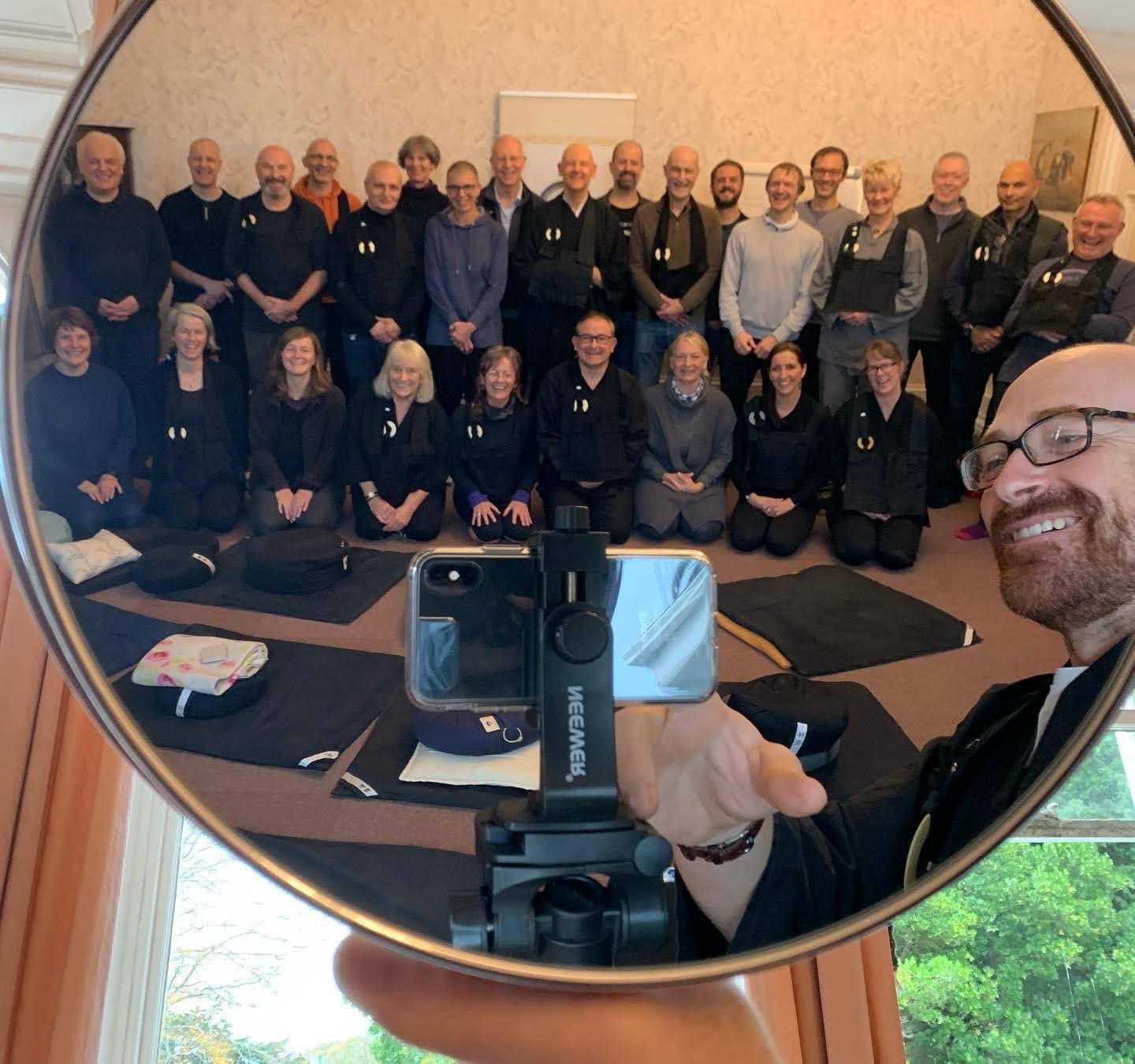
At the Noddfa centre in North Wales, around thirty of us moved together within the boundaries of the sesshin schedule. We shared the same space and the same silence, while each of us encountered whatever appeared in our own experience.
Thoughts came.
Emotions came.
Preferences came.
I noticed how quickly I could become caught by them.
Sometimes a thought would simply arise and disappear. At other times I would grab hold of it, and almost immediately another thought would follow, and then another. Within moments I could be somewhere completely different, following a story created inside my own head.
There is nothing particularly wrong with thinking. We need thought. We plan, reason, remember and communicate through it.
But sitting there, I became interested in something much simpler.
What happens if I don’t follow the thought?
What happens if I just let it be?
Sometimes, when I didn’t grasp at what appeared, there seemed to be a little more space. Not necessarily anything dramatic. Just less interference between myself and what was happening.
And then, of course, there was the mirror.
Why spend five days staring at your own face?
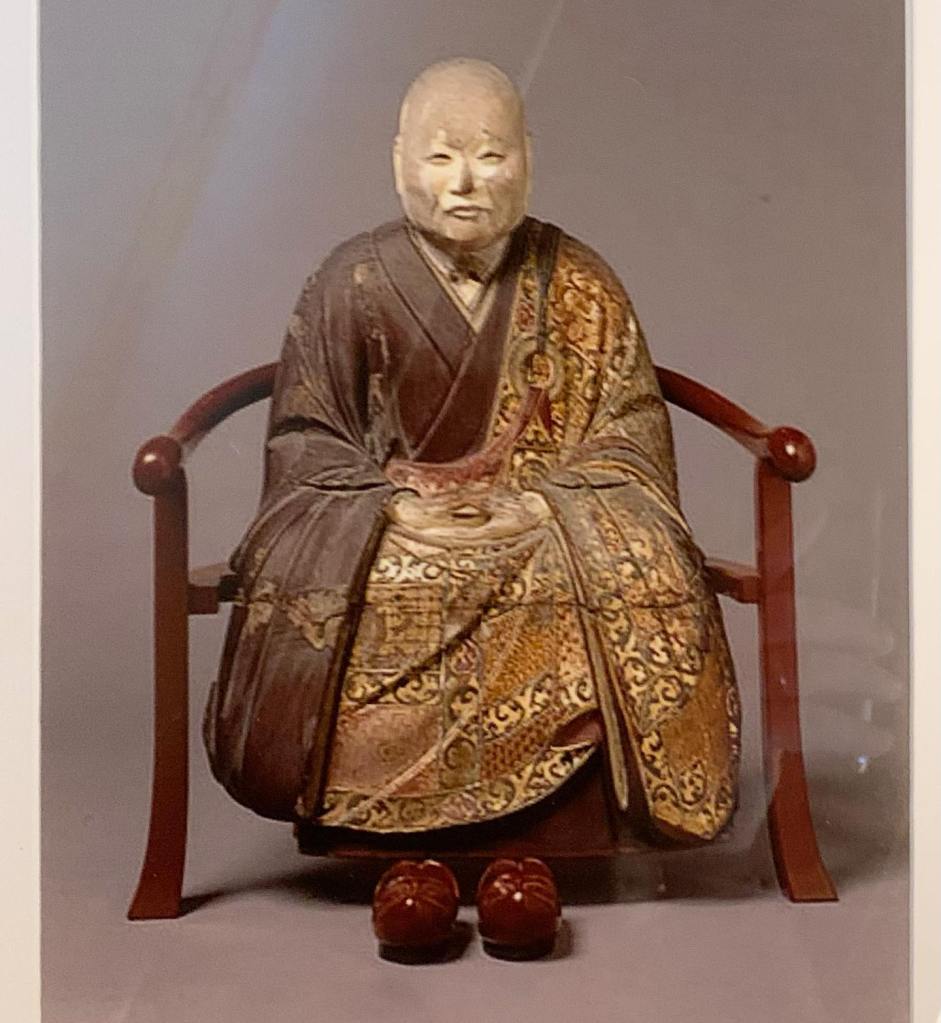
The Mirror Zen Sesshin is centred around sitting meditation while gazing at your reflection. The practice has its roots in the work of the female Zen master Kakuzan Shido at Tōkei-ji temple during Japan’s Kamakura period.
Kakuzan practised meditation using a mirror as part of her investigation into her own true nature.
Centuries later, there I was in North Wales, sitting in front of one myself.
At first, a mirror seems very ordinary.
You look.
There is your face.
But the longer I sat there, the stranger the relationship between the image and my thoughts became.
The mirror reflected a face.
My mind supplied everything else.
I might look at the reflection and thoughts would appear immediately.
About age.
About appearance.
About who I thought I was.
About who I wanted to be.
About inadequacy.
And yet the mirror simply continued reflecting what was in front of it.
So questions began to arise.
Is the mirror showing the contents of my mind?
Where in the mirror are the thoughts I am thinking?
Can I see them?
And if the thoughts aren’t there in the mirror, where exactly are they?
I didn’t find an answer that I could package neatly and bring home with me.
Perhaps that wasn’t the point.
The questions themselves became part of the practice.
I would sit.
Look.
Think.
Notice.
And return.
Sometimes the face in front of me seemed incredibly familiar. At other times, after staring long enough, even this thing I so confidently called my face became rather strange.
Who was I actually looking at?
During those five days, thoughts of inadequacy appeared particularly strongly. They were familiar thoughts. Normally it is very easy to believe them simply because they are happening inside my head.
But sitting in front of the mirror introduced a peculiar gap.
There was the face.
There was the thought about the face.
Were they the same thing?
There was the person reflected in front of me.
There was everything I believed about that person.
Were those the same thing?
For five days I kept looking.
Sometimes I became lost in thought. Sometimes I became irritated. Sometimes I wanted to move or scratch or do practically anything other than continue sitting there.
And sometimes there was simply a face in a mirror.
By the end of the retreat, I’m not sure I had discovered anything that I could call an answer.
I did leave with a renewed desire to practise, a deep respect for those who have walked this path before me, and gratitude for Kakuzan Shido and the generations of practitioners who kept this unusual practice alive.
And I left with questions that somehow felt more valuable than the answers I might have tried to give them.
There is the reflection.
There are all my thoughts about the reflection.
And somewhere in that very ordinary act of looking—
what am I actually seeing?