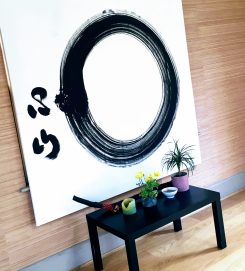
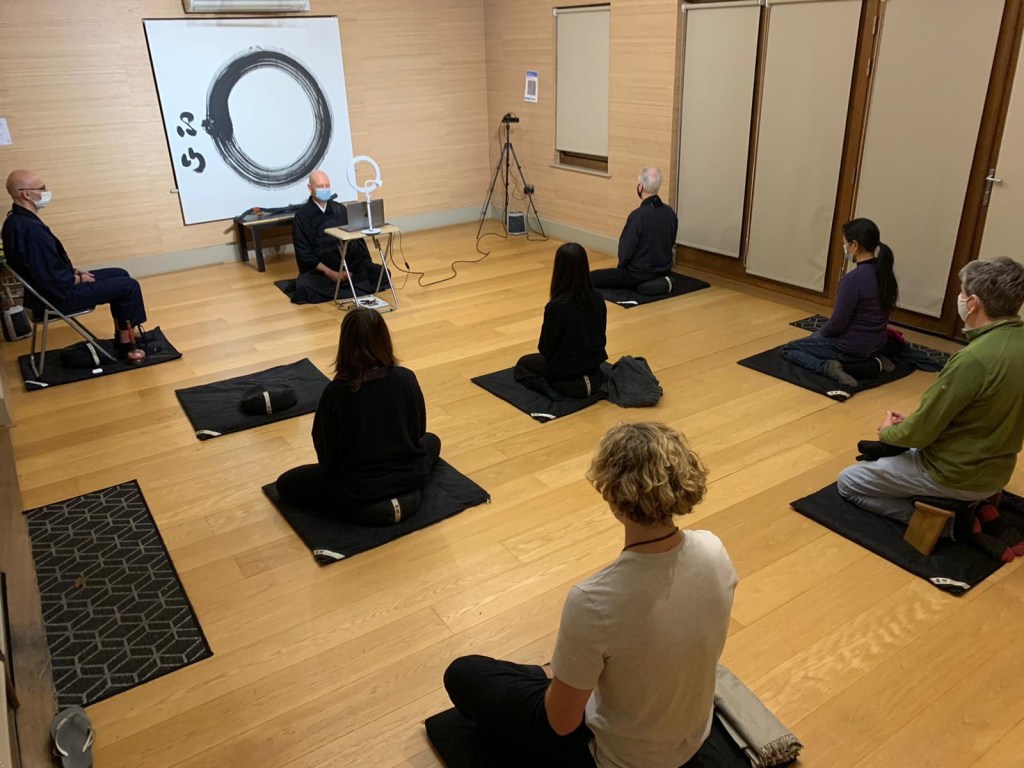
On Tuesday the 7th of December, I went to London, to the Zenways dojo in Camberwell to attend Rohatsu. Rohatsu is a Japanese word which literally means 8th day of the 12th month, 8th of December in other words. This is the day that Buddhists celebrates the day the historical Buddha experienced enlightenment, he realised his true nature and the nature of his own mind.
In the Zen tradition, that day is celebrated by spending the entire night meditating. So, we started at around 9.30 in the evening of the 7th with a talk by Daizan and we finished the following morning at 6. For the entire night, we alternated 25 minutes of sitting meditation sessions with 10 minutes sessions of walking meditation. We had 2 breaks of 15 minutes when we had matcha tea, I believe. So, why Rohatsu or Bodhi day as it is also called?
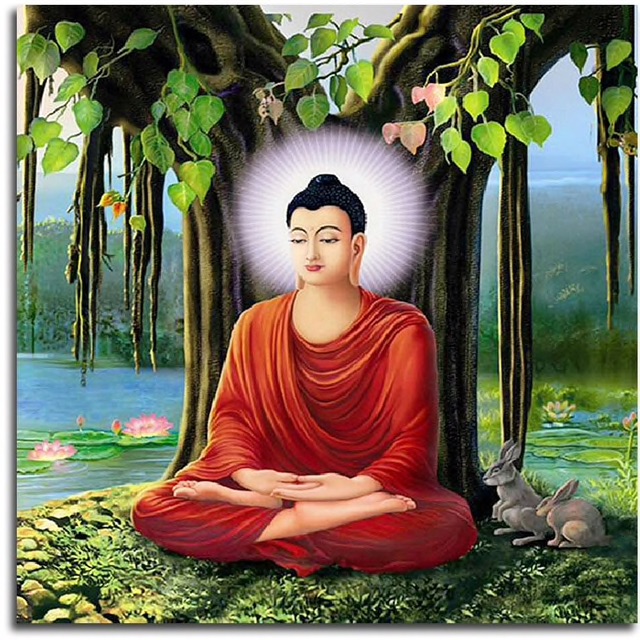
About 2,500 years ago, Shakyamuni Buddha sat under a tree, famously known as the Bodhi tree and reached enlightenment or awakening or realisation. He realised why he and other human beings suffer, he awakened to the fact that our own mind plays a big part in this ‘suffering business’. He realised that our own mind wouldn’t allow us to be unconditionally happy. At the same time, he ‘acquired’, during this awakening, the wisdom that allowed him to experience the happiness that is not conditioned or dependent by external conditions; the Buddha became unconditionally happy.
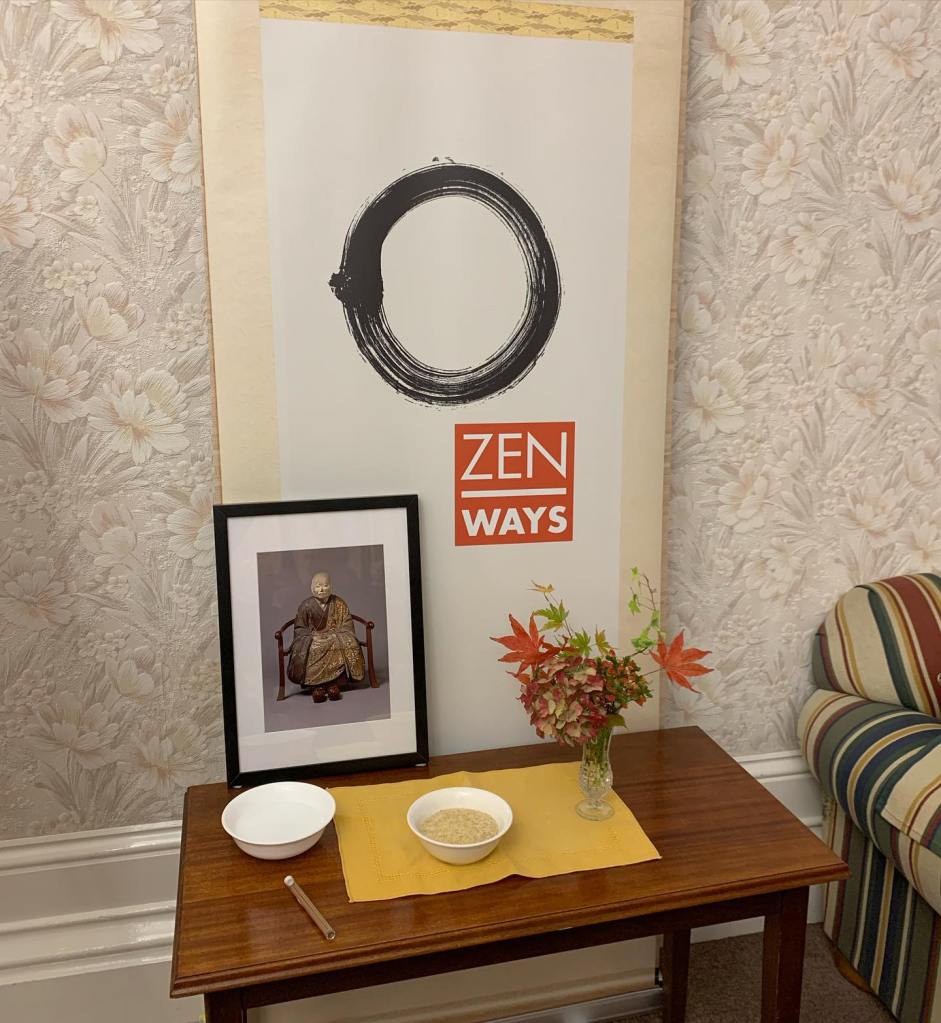
After the talk Daizan gave, we ate some rice pudding with the addition of some honey. The reason for that is found again in the experience the original Buddha had himself before he sat under the Bodhi tree prior his awakening. Shakyamuni Buddha for a few years before that he fasted and practiced a very strict self imposed austerity. His body became very weak and, I can only guess here, his mood and his energy became very low. One day, he was noticed by a very compassionate girl called Sujata who gave him a bowl of rice pudding with some honey in it. The Buddha, despite his self imposed austerity, accepted the food and soon his energy and his vitality were restored. Now he had the strength he required to carry on with his practice. He could look forward to the end of his quest, namely, finding out about the nature of all things. Out of this episode in which Sujata gave Shakyamuni Buddha the rice pudding stems the Buddhist doctrine of the Middle Path; the path between extremes, between asceticism and hedonism. I have to mention here that the Buddha, before setting off on his quest was a prince and he had access to all the pleasures that a prince could have. That didn’t give him that unconditional happiness that he was after since he realised that he could still get sick and die as anyone else. That unconditional happiness could not be found in the starvation of his body either as he experienced in those years of self austerity. Starve himself didn’t bring any joy and, on top of that, he must have realised that both body and mind must be nourished if he wanted to reach that state of unconditional happiness he was after.
The rice pudding we had was very sweet. I loved it and felt so grateful for this symbolic and nourishing food my body was receiving. The course was now set, we would just sit with our strongest resolve to reach enlightenment by dawn!
I forgot to mention that for the night I was Jikijitsu (I will write a post on the Jikijitsu role in the Zen tradition). My role was to keep the timings of the various sitting and walking meditation sessions. To help me with this, I had my wrist watch, two clappers and a little bell called Inkin. The wrist watch, of course, would give me the time, the clappers and the Inkin would signal to the attending people when the various sessions started and finished. My role also included another task which I am going to write about later on.
In the dojo, there were 10 people but the practice community, or Sangha as it is known also included some 30 people who joined in online. It is so beautiful to feel the energy, the intention and the determination of all these people coming together. Of course, we are meditating alone, we are alone with our own mind, our own challenging thoughts, our own physical pains but, for me at least, the presence of the community is fundamental. In this journey in which we travel alone, we are actually travelling all together, all as one, one as all.
During my sitting, I was doing my best to contemplate the nature of my mind, the impermanence of thoughts, perceptions, emotions, feelings and so on. Just trying to stay in that neutral place where all is just observed, where nothing is personal but all is just what it is. I remember, at one point towards the end of the night, to hear the sound of an airplane overhead, Camberwell must be on the flying path of one the big London airports, Heathrow I guess. The sound was simply a sound, it was not loud, it was not quite, it was not bothering me, it was not causing any particular reaction in me, it was simply a sound. I know how the mind works normally, I hear a sound, and straight after there is a comment about it, too loud, it is ‘ruining’ the silence, the airplane is a big polluter, or other kind of comments. This time it was just a sound, it was not followed by anything else, it was an empty sound and it was full of soundness at the same time. It was complete as it was, it didn’t need anything else to be what it was already. Then a thought came to my mind and, as for the sound, it was just a thought, it was not good, it was not bad, it was not annoying, pleasant, unpleasant…. it was simply a thought, empty of a fixed and independent entity (the thought depended on many different causes, starting from the mind reflecting it) and yet full and complete as it appeared and vanished. I didn’t have to do anything with it or about it, it just flew into the sky of my consciousness in the same way the plane flew undisturbed in the sky above me just seconds before. Then, all that happened after that had the same quality. Everything was just what it was; all movements, people talking, noises, the traffic on the way home were just what there was in each moment, neither good, nor bad, annoying and so on. That is what we can call no-separation, no-separation from me experiencing the experience and the experience itself, just one thing without any additional commentary.
Of course, a long night contemplating the mind can really help seeing more clearly into its own nature and the illusions that this can create. The challenging conditions created by a night long meditation, when the body is begging for a bed, can show more clearly the mental patterns and the tendency to not accept the reality of things. Not giving in to my own mind is the initial and essential thing to do if I want to find a different way to interact with and, in life. Gently allowing the mind to take its own course but not giving any energy, allowing things to arise and to pass, just remain present and have the ambition to see what is clearly necessary to do in each moment. That, in my own experience, starts developing another kind of mind, the wisdom mind, the mind that knows without knowing as I like to call it. It knows without knowing because it doesn’t need to have the knowledge of past events, of an encyclopaedia of things to know what the present moment requires. This illuminated mind just prompts one to act with no further thinking, what it is necessary, appears very clearly, no need to ask around. Out of laziness, out of habit, out of fear, out of so many different things, we don’t take the trouble or we are not patient enough to wait for this mind to show what is real and necessary, we, at least me, just jump on board of our personal and conditioned mind and we just act, or don’t act, out of laziness, out of habit, out of fear, out of so many different things. Meditation and mindfulness help us greatly in developing this new approach toward things in general, they, meditation and mindfulness, develop this patience and care that allows the illuminated mind to shine forth and help us to act in a more generous, caring, effective and true way.
Back to Rohatsu now. The night went on very smoothly, one session of sitting was followed by some walking meditation in a tennis court adjacent to the dojo. We would do 5 laps, around 10 minutes. Outside I felt cold and that helped me to stay awake during the night. At one point, I wore an extra layer since I had a nose bleed and I thought it was caused by the contrast between warm inside and cold outside. In any case, I did like and benefited from the walking. All I was doing, was to try to stay with the sensations I was experiencing; cold, sleepy, tired and so on. I tried my best not to energise any of the thoughts that came to visit. Just open and aware of walking.

One more responsibility for the Jikijitsu during Rohatsu is to use the Keisaku. This is a flat wooden stick used as a remedy against sleepiness. It was the first time I used it and I didn’t know exactly how to. Initially I thought that I would need to gently tap it on people’s shoulders to keep them awake or to remind them of their initial resolve. However, I found out that you want to strike people with some energy to energise them to keep practicing. There is a specific place on people’s back where the Keisaku is used and, in that place, no injuries are left but the vigour in their bodies is restored. That was for me a very interesting experience because of course, I felt a strong objection towards ‘hurting’ people but then I realised that it was my role in that moment. All was done with compassion and care towards others who just wanted to energise their practice. It was something that went beyond my mental likes and dislikes and it was done with love and compassion, supporting other people in their own practice.
In my experience with Zen, there have been many of these situations which might appear to be controversial for the ‘conventional mind’. It is unusual to think of striking a person on their back out of love and compassion. However, that is my own understanding of the use of the Keisaku; it is not about me and about what I like or don’t like, it is about being available to others, to support them in their own practice and, if what it takes is to be hit by a flat stick, you don’t argue about that, you just do it. That is what the moment, that is what the path to liberation is requiring; it is this going beyond the intellectual mind, the good and the bad, right or wrong, breaking through the conditions ‘imposed’ by our own minds.
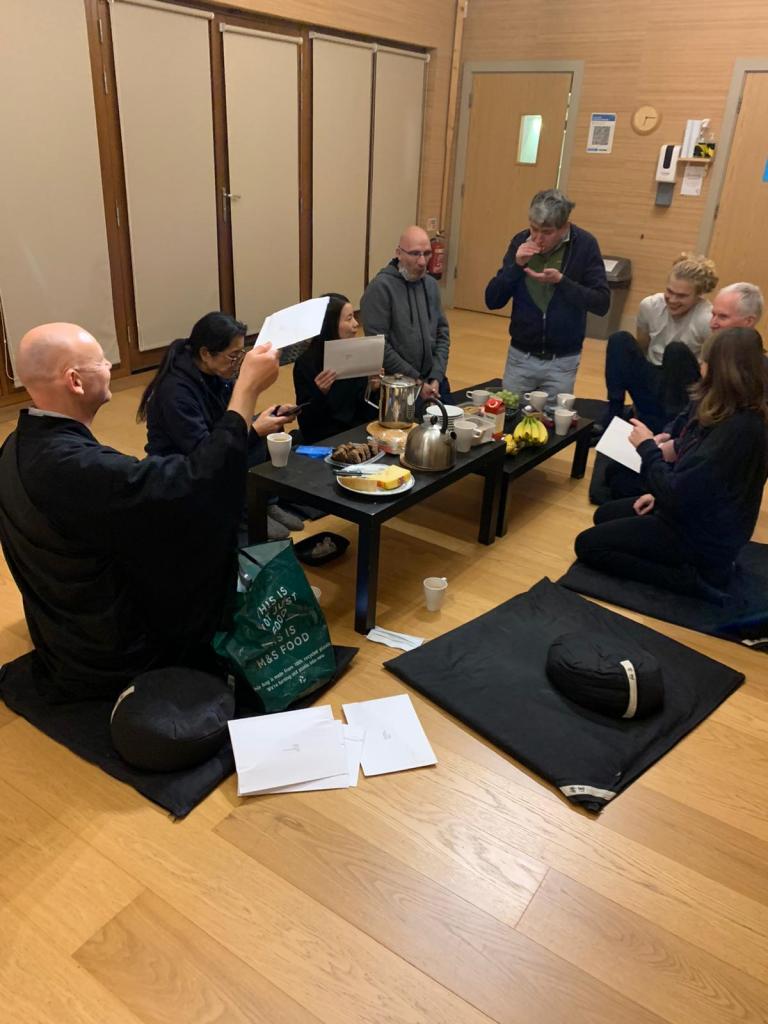
At 6 in the morning, I rang the Inkin and clapped the clappers for the last time. We then gathered together around our breakfast tables and enjoyed some food. There was no signs of sleepiness in myself and I could not see signs of sleepiness in other people either, just the desire to share a very joyous moment.
 Zen Mindfulness Cambridge Zenways Italia