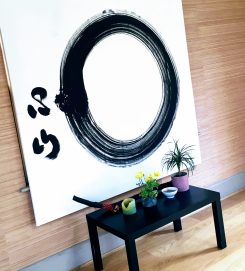
In October 2018, I attended a week-long course to learn how to teach meditation and mindfulness. The course was organised by an organisation called Zenways and was led by one of its members, Seán Collins. By the end of that week, I knew that things would never be the same again. A major change happened during those days I spent in Forest Row, where the course took place. I felt I had gained a lot of confidence in myself and in what I could do going forward.
Of course, little did I know then that the journey would be long — in fact, I feel it never really ends. Sometimes it can feel arduous, other times enjoyable. I was beginning to understand a little more about myself and how the mind works. The mind assigns value: when it judges something good, I act accordingly; when it deems something bad, I act differently. Over time, the mind builds a storehouse of ‘good’ and ‘bad’ things, and we tend to act based on this collection — drawn to the good and repelled by the bad.
So, what changed during that week? It’s hard to put into words exactly, but one way to describe it is that I discovered the neutral place. This neutral place is a kind of mental awakening that sees things as they truly are, not as they are shaped by the habitual mind and its storehouse of judgments. It’s a clearer, more direct way of seeing — unfiltered. New potentials seemed to appear on the horizon.
In the weeks following the course, emotions started to pour out. It felt like something inside me was unraveling and freeing itself. As this happened, I would find myself crying — a lot. Not tears of sadness or joy, just crying. It was beautiful and liberating. I could observe this outpouring with a kind of detachment. It was happening, but not to any particular person — it was just happening.
Of course, when we become detached from our inner turmoil, we are less enslaved by it. I’ve learned that when I’m not attached to what’s going on inside, I don’t suffer; I can witness it without being overwhelmed. I suppose this was my first real experience of how meditation and mindfulness work in practice. Before that, I had mostly theory in my mind, and by practicing regularly, I was reaping benefits like feeling calmer, kinder, and more patient. Now, I was beginning to enjoy a different way of relating to myself and to the people and things around me.
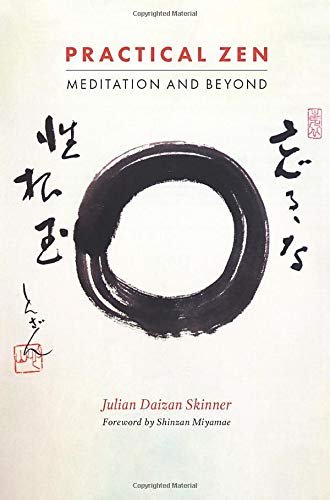
Back to Zenways. I discovered Zenways because some time before I had read a book by Daizan Roshi called Practical Zen: Meditation and Beyond. I remember enjoying the book very much and being drawn, among other things, by the fact that Daizan ran a community, or Sangha, where people practiced Zen Buddhism. I wanted to join. I had never really explored Buddhism before and knew little — almost nothing — about Zen. After the course in Forest Row, I joined Zenways. I think my ‘opening’ during the course led me directly to the source of what had sparked it — perhaps out of gratitude, curiosity, or excitement.
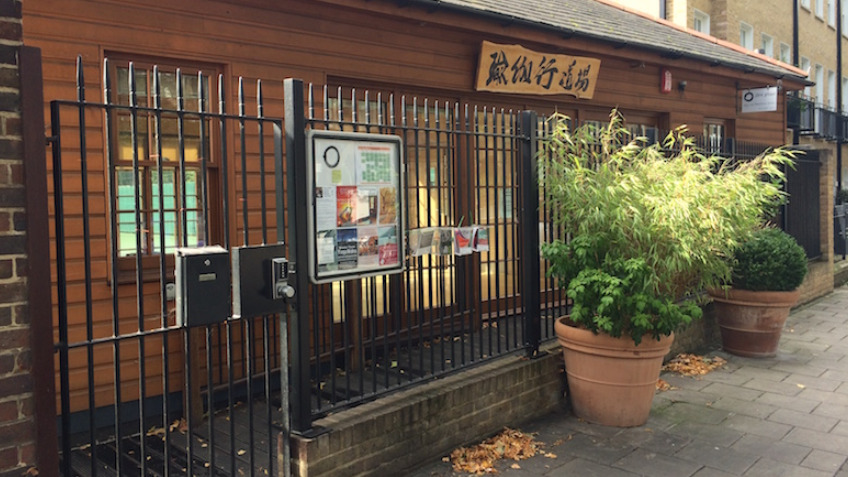

I wanted to meet Daizan as soon as I could, so I went down to the dojo in London, Camberwell, and finally met him. I had a private meeting with him, called Sanzen in Zen tradition. In these meetings, students share their practice with the teacher. I remember all I could say was ‘thank you!’ — just gratitude for the shift or opening that had happened a few months earlier.
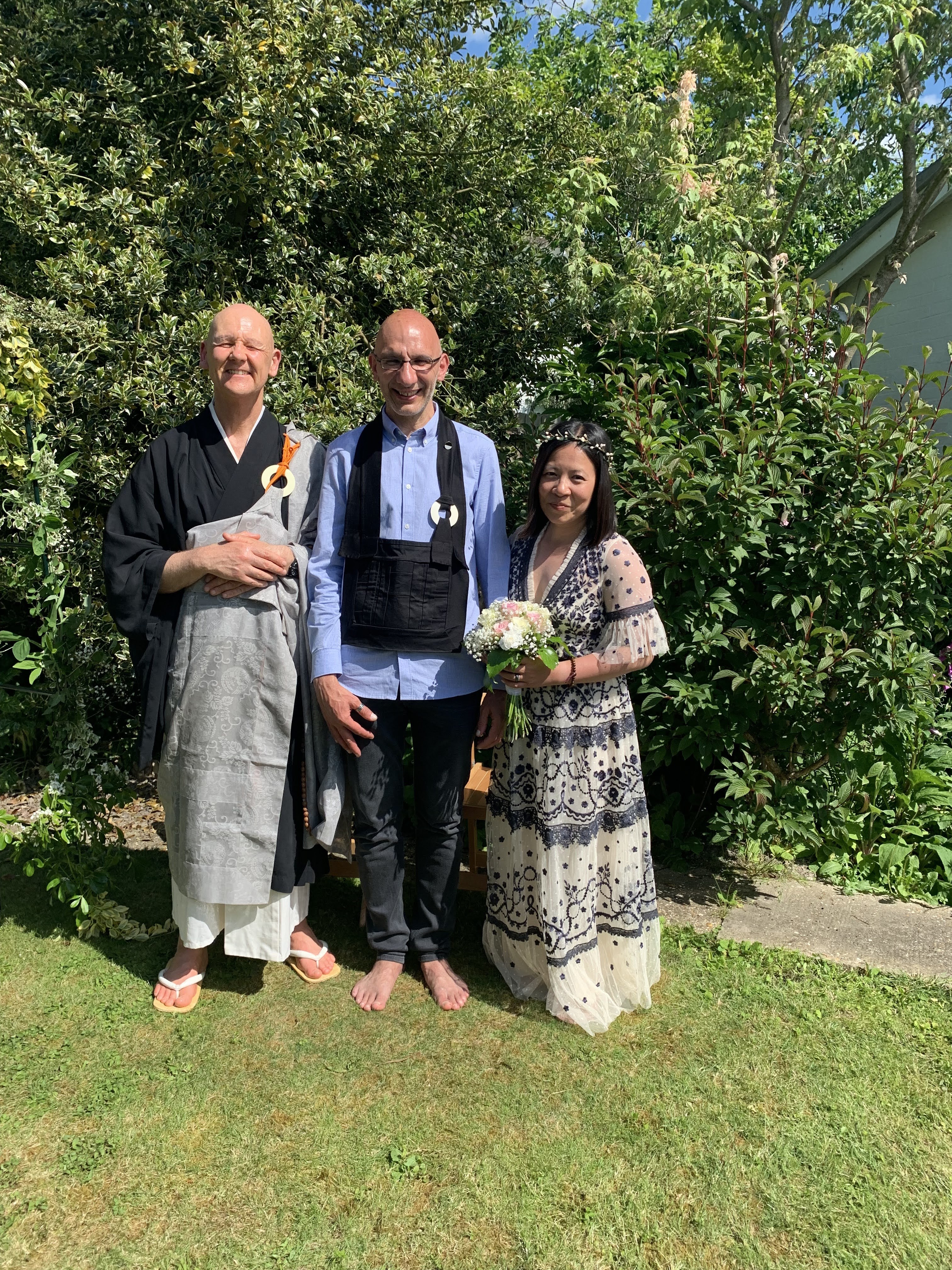
From that moment on, I became more involved with Zenways and their activities. Becoming a member means becoming a Zen student — practicing Zen under Daizan’s supervision. That’s what I did: I started practicing Zen, which for me meant one or two daily meditation sittings. I also began reading the vast Zen literature, which helped me understand, or try to understand, what Zen masters of the past and present have been pointing to. It feels right to say that through all this practice, reading, and mindfulness, I started to develop a Zen mind — or no-mind, whatever that means.
Little by little, I realized that Zen can be practiced in countless ways. Every activity we engage in can be a practice of Zen. To me, the first and still most important lesson has been this: when doing something, do it totally. Become the action, be fully present and wholehearted. By becoming one with the action, you no longer worry about what the mind is doing — likes, dislikes, resistances — but focus on what is necessary.
As I’ve often heard, this breaks down the wall of separation that makes us feel isolated from the universe, like a small struggling entity facing an overwhelming cosmos. Zen, as I understand it, helps us see that this split is an illusion created by the mind and its storehouse of ‘good’ and ‘bad’. In reality, we are part of the moving universe — we are the universe itself. The self, and the idea of a separate self, is empty and unreal. It persists only because of our habitual thinking about ourselves and everything else.
This understanding becomes experiential little by little. Still, I sometimes have to work hard to bypass the habitual mind that obscures this Truth. It is a constant reminder — moment by moment — to live without division, without separation, simply acting as the situation requires.
This, in a nutshell, is the training I have been doing with Zenways. There is more, of course, but for me, this is the core teaching and practice. Over the years with Zenways, I also came to understand why it’s called Zenways. The reason is simple: there are many ways to practice Zen, not just one. Zen can be practiced while walking, working, running, speaking, looking in a mirror, or working with a Koan. Zen is no separation in the many different ways we manifest our presence in action. And, of course, Zen would not allow any definition of itself…
 Zen Mindfulness Cambridge Zenways Italia