I know every wrinkle on my face, every scar, indentation, rise and valley—because I stared into a mirror for five consecutive days.
Last month, I attended a sesshin, a meditation retreat in the Zen tradition. During this period of intense practice, one follows a strict schedule: sitting meditation, walking meditation, working meditation, mindful eating, mindful movement, chanting—and silence. A lot of silence.
And it was from within the depth of that silence that I began to see more clearly what was actually going on in my mind as I moved through the various activities of the day. There was no conversation to use as distraction—no idle chatter to lean on. I had to face myself completely: my thoughts, my feelings, my resistances.
The desire to move, to scratch, to rush to the food line, to ignore others, to feel irritated because something had run out… In the silence, these things are no longer hidden. They show up loud and clear, like a scream in the dark. And in that silence, there’s no pretending you didn’t hear.
But don’t get me wrong—there’s also a great beauty in spending so much time in silence. Especially for someone like me, who sometimes feels awkward or inadequate in social settings. I didn’t have to speak. I could just be—immersed in the rhythm of the schedule, in the tasks, in my own inner world, and in the image of my face reflected back at me in the mirror. In the end, not such a terrible thing.
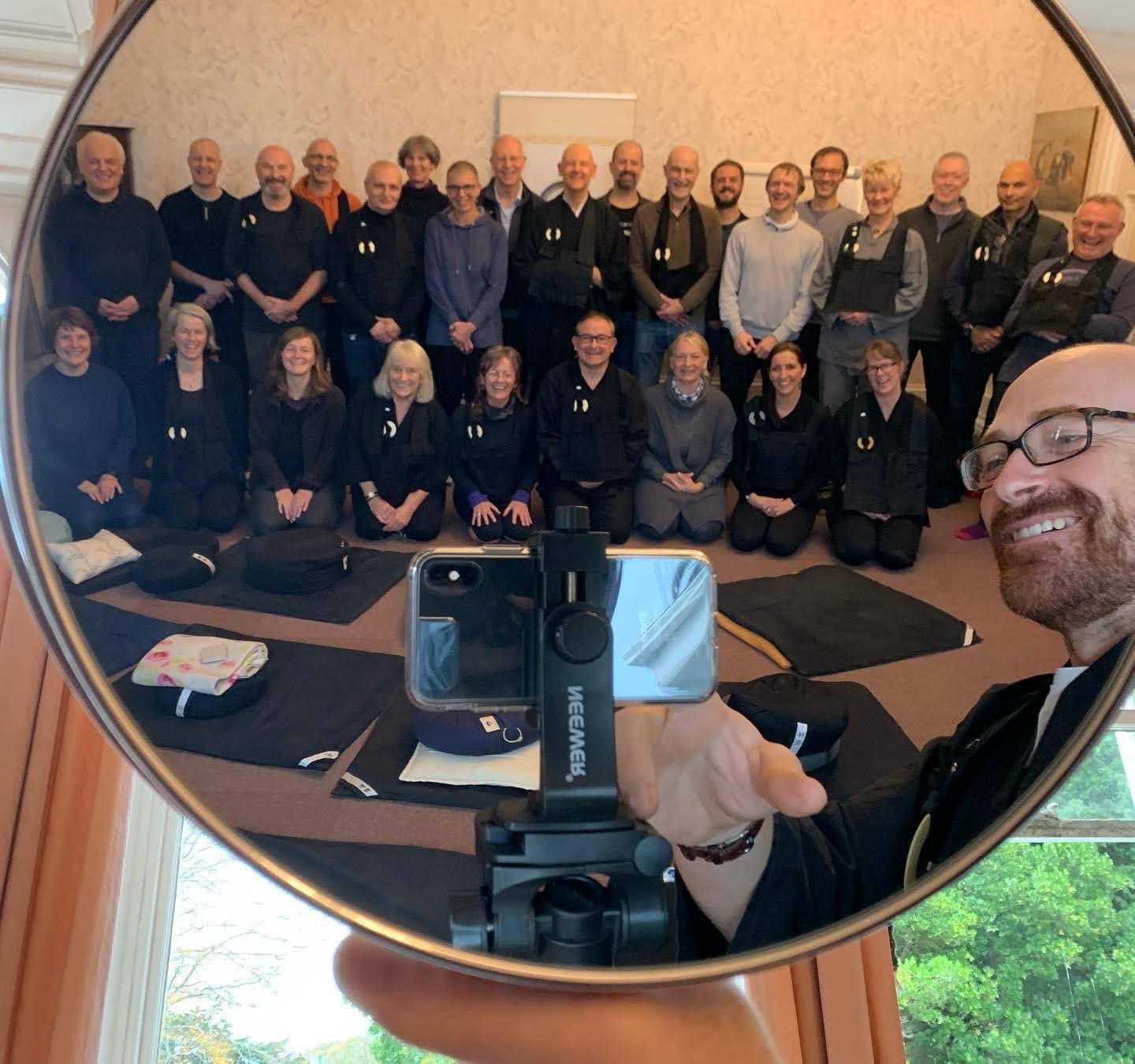
At the Noddfa centre in North Wales, about thirty of us moved together inside the boundaries of the sesshin schedule, each one turning inward. Observing thoughts, emotions, preferences. Learning to notice without reacting—one of the hallmarks of a mindful mind.
We were cultivating the ability to let thoughts and feelings arise without clinging to them. And the more I allowed, the more a spaciousness seemed to open. That’s how it felt. But the moment I grasped at a thought—even just slightly—this space seemed to collapse around it. I was caught. My attention was caught.
Is there anything wrong with being caught? No—not really. Nothing is truly right or wrong in that sense. But when I grasp a thought and get stuck, I limit myself. I shrink the world down into tight, claustrophobic boundaries, missing what’s actually happening here and now. I’m holding on. I’m not letting go. I’m fixated on a concept, an idea—intellectual, not experiential.
Of course, sometimes we need to think things through. We need to plan, to reason, to communicate clearly. But in meditation, we are not trying to problem-solve. We’re allowing thoughts to come and go undisturbed. The issue is never the thought itself—it’s what we do with it.
We all know how one thought leads to another, then another, spiralling endlessly downward into a tangled thread of our own making—our own personal, conditioned story about how things are. That spiral is what we often call “the world of separation”—my story versus the outside world. The “hostile” world.
Instead of experiencing life directly, we think about it. We evaluate. We plan how to get more of what we like, or how to avoid what we dislike. But thoughts are not the experience—they’re a commentary on it. They’re ideas about life, not life itself.
What Zen practice offers is a way to chip away at this illusory wall that separates us from the world. And once the wall dissolves, we see there was never any separation to begin with. We are not in opposition to the universe—we are the universe. There is neither hostility nor non-hostility. There is only this: what we are.
Still, you might wonder—why spend five days staring into a mirror?
The Mirror Zen Sesshin is built around a practice of sitting meditation while gazing at your own reflection in a mirror. This unique form of practice was developed during Japan’s Kamakura period by the female Zen master Kakuzan Shido at the Tōkei-ji temple.
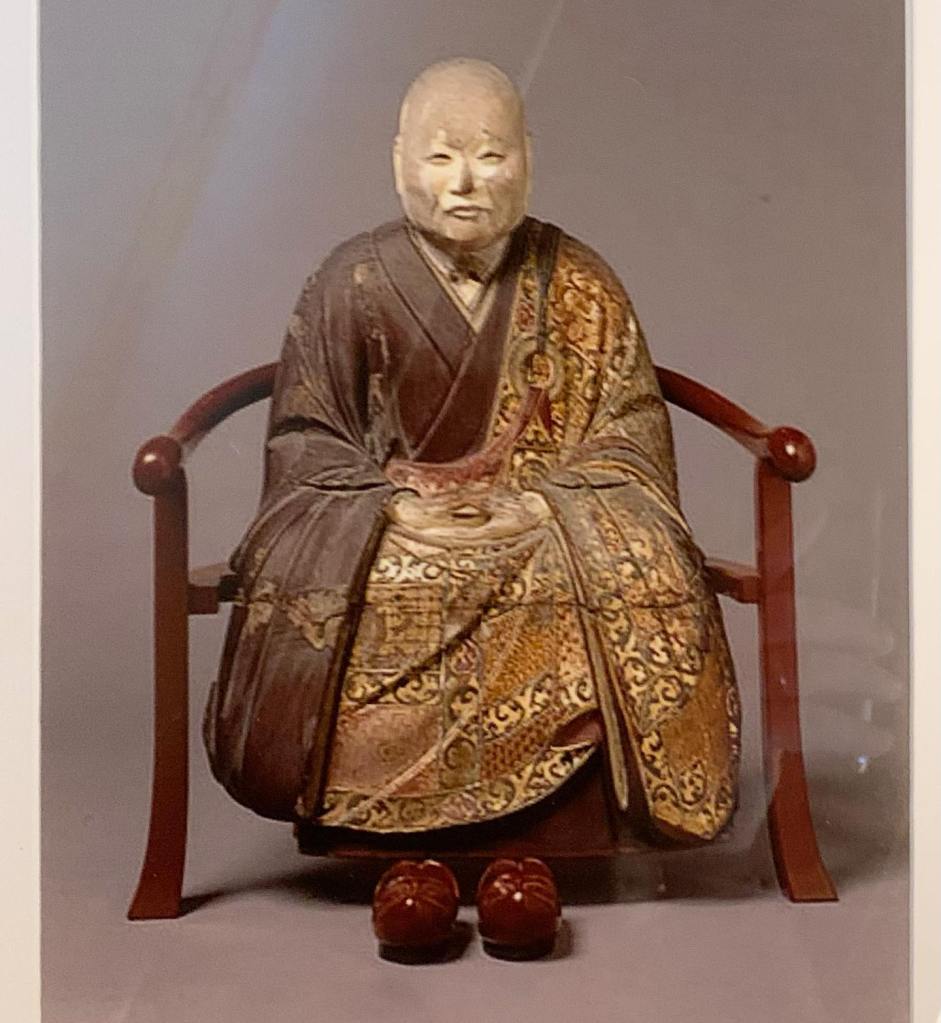
She would meditate in front of a mirror to see into her own true nature.
In her footsteps, generations of Zen nuns and, more recently, we at the Noddfa centre, have followed this same practice—meditating with mirror koans, contemplating reflection and image.
I imagine Kakuzan Shido approaching her mirror. Thoughts must have flickered through her mind as she drew closer. And then—there, reflected back—she would have seen clearly: her thoughts were not in the mirror. They were mirrored only within.
The glass reflected the form in front of it, but the thoughts… they came from elsewhere. Two realities emerged: one, the objective image in the mirror; the other, the subjective commentary of the mind.
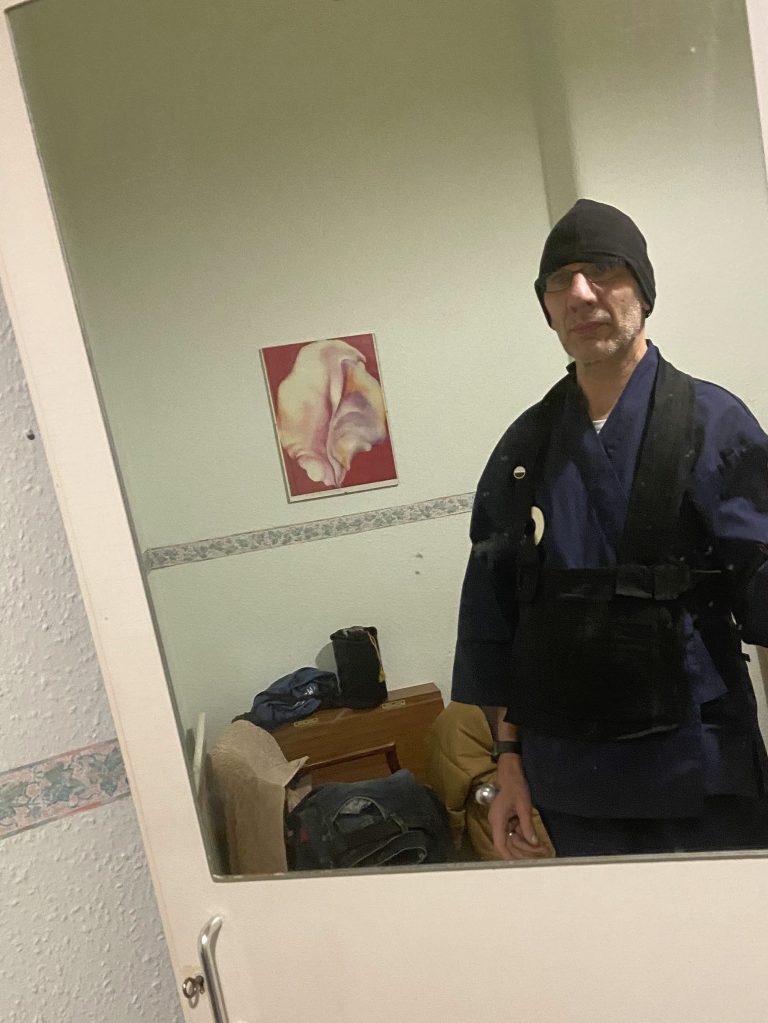
She must have seen that the two did not match. Her mind coloured her perception. Mood, light, fear, habit—these shaped her reality more than what her eyes actually saw. And so, perhaps, she continued her practice, refining it, and passing it down. My reading may not match exactly what inspired Kakuzan Shido—but this is what I felt.
Is the mirror showing the contents of my mind?
Where in the mirror are the thoughts I am thinking?
Can I see them?
These questions naturally arose and sustained me throughout the practice of seeing into my own nature. If the thoughts are not in the mirror, then where do they come from?
These kinds of questions don’t lead to intellectual conclusions—they crack open something deeper. They gently unsettle our logical mind and point us toward a different way of knowing: not theoretical, but embodied. Moment-to-moment. A shift from philosophy to presence. From analysis to intuition.
What did I take away from the retreat? I’m not sure I brought anything back in the usual sense. But I left with inspiration to keep practising, with deep respect for all those who walk this path, and with gratitude—for Kakuzan Shido, and for the 22 generations of practitioners who kept this fragile, beautiful flame alive.
What did I see in the mirror of my mind? I saw, most vividly, the thoughts of inadequacy that sometimes take hold of me. And I saw, too, how they could be released. How I could let go—not just of fear or self-criticism, but of the very idea of a separate “me.”
That illusion of separation: that’s what showed up most clearly by the end of the retreat.
So now, full speed ahead…
 Zen Mindfulness Cambridge Zenways Italia